Skip to content

Accounting techniques

About the Department of Accounting Techniques


Overview:


Accounting is a science that society in general, and business owners in particular, pays great attention to, due to the significant and effective role it plays in the business world. Accounting is the language used to provide internal and external parties with accurate and reliable information about an organization's financial performance, which in turn helps them make important decisions that contribute to the advancement of its reality and financial capabilities. Accounting is indispensable in any business, whether governmental or private. Hence, the importance of studying accounting sciences and the important branches under its umbrella, such as financial accounting, cost accounting, auditing, government and corporate accounting, and other branches that are indispensable in the world of finance and business, as well as in many of the functions of government institutions.
The Department of Accounting Technology is one of the administrative departments at Al-Musayyab Technical Institute, established in 1993. It works to equip students with a variety of skills in the accounting field, which, upon graduation, will help them maintain financial records, prepare financial statements and reports, and everything related to budgets and employee financial benefits. In conclusion, the department chair and council strive to overcome all obstacles faced due to changing work conditions and challenges, and to develop a development strategy to achieve the required quality in accordance with the standards approved by the responsible authorities at the Ministry of Higher Education and Scientific Research. We ask God to crown all efforts and endeavors with success and guidance in serving our beloved country and elevating the status of our institute and our distinguished university.


Vision:


To advance the accounting and auditing professions in line with economic development and serve official and unofficial entities and various economic sectors.

Mission:


To enhance the role of accountants and auditors in achieving economic development through the work they provide and establish effective relationships with the business environment by working within departments and institutions, keeping abreast of developments in the field of accounting and auditing standards, and endeavoring to implement them practically.

Core Values:


The graduate will develop a commitment to and adherence to the rules of professional conduct, including honesty and integrity, and consider the accountant and auditor as an essential element in eliminating financial and administrative corruption.

Department Objectives
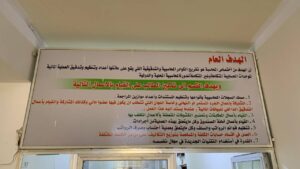
1. The graduate will be able to prepare, organize, and audit the financial transactions of economic units.
2. The graduate will demonstrate the professional ethics that accountants and auditors should possess in society.
3. Contribute to developing the capabilities and skills of employees in various economic sectors and graduates who have not yet joined the workforce by holding specialized courses in the fields of accounting and auditing.
4. Prepare studies and research and provide scientific and technical consultations to various entities.
5. Contribute to building a learning environment characterized by creativity, excellence, and positive interaction by providing the requirements for electronic accounting work and training students in modern techniques in the fields of accounting and auditing.
6- Building a true partnership with the community through training courses, participation in relevant workshops and conferences, and scientific cooperation with institutes and colleges inside and outside the country.


Academic Requirements of the Department

Description of the academic program

Faculty

Courses

Department students

Lectures

Lecture schedule

Faculty research

Student projects

Job Description of the Department Graduates

Click here

A resource that supports teaching and learning

Student guide

Contact Us


Student Numbers for the Accounting Techniques

49
First Stage – Morning Study
55
Second Stage – Morning Study